
Property management · Toronto
Property management in Toronto
In Toronto, many rentals are condominium units owned by individual landlords, who deal with a building's management office as well as a tenant. Tenant.ca manages condos, apartments and houses across the city for a flat monthly fee, not a percentage of the rent. One team handles tenant communication, rent monitoring, maintenance coordination and owner reporting, and you follow it all in the owner portal.
60-day trial periodThe first 60 days of your management agreement are a trial period, so you can see how we work before you settle in. Ask us how it works before you sign.
- Toronto is in our service area
- Owner and tenant portals
- 60-day trial period
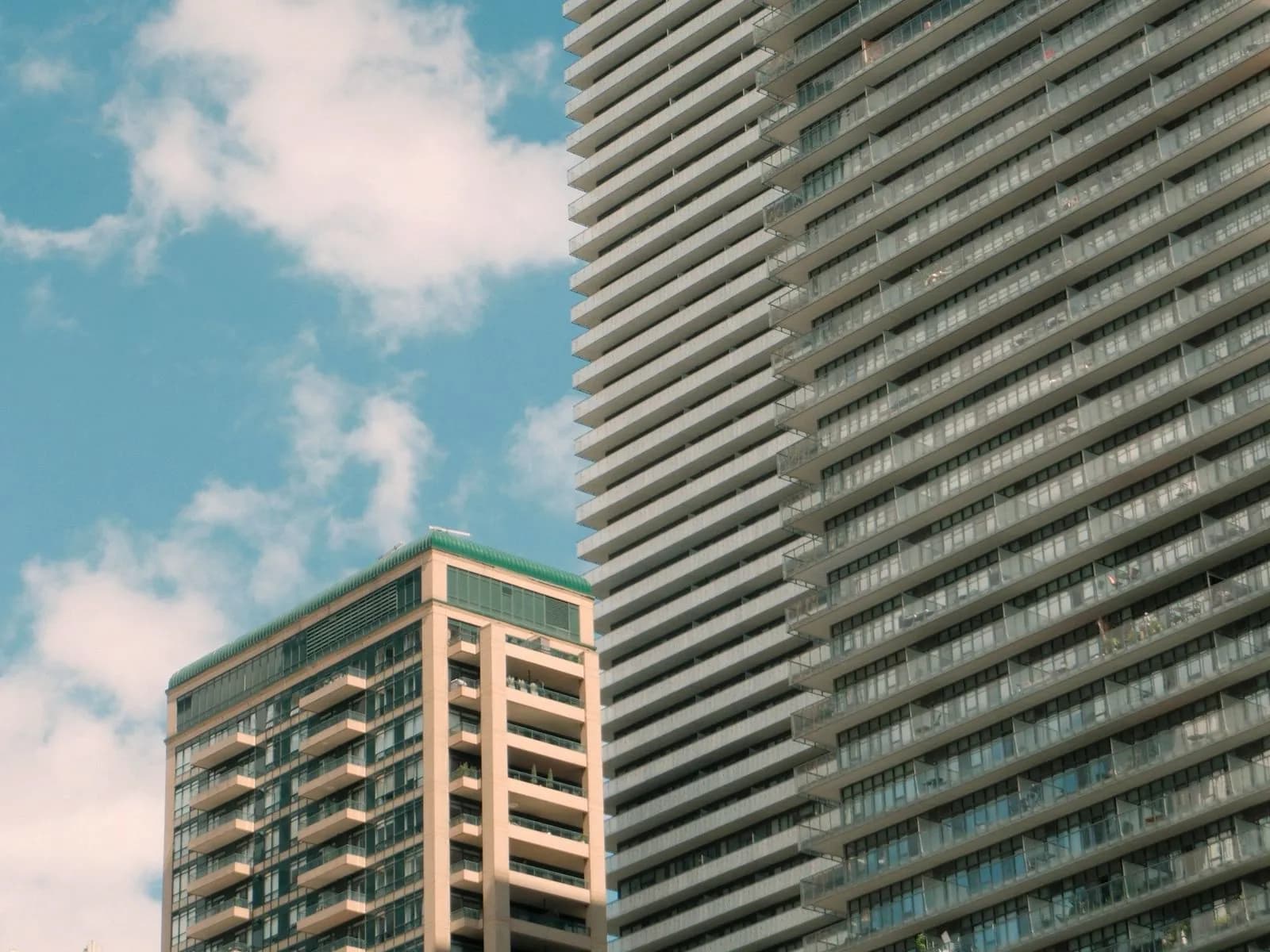
Renting out a property in Toronto
What Toronto owners rent out, and what we take on
Toronto has the GTA's largest rental stock: downtown and midtown condominiums, purpose-built apartment buildings, and houses with secondary suites in established neighbourhoods. Many units sit in buildings with their own management offices, elevator bookings and move-in rules, so coordination with the building is part of the work.
Whatever the property type, the day-to-day work is the same: a tenant with one point of contact, rent that is monitored and followed up, repairs that are quoted, scheduled and documented, and an owner who can see every payment, request and approval without chasing anyone.
The local picture
What to know before you rent out in Toronto
Four things that shape a Toronto rental, each from its public source. Read on November 4, 2026.
Condos are a large part of the rental market
CMHC counted 162,819 rented condominium units in the City of Toronto, 42.3% of its condos. A rented two-bedroom condo averaged $2,942 a month with 0.9% vacancy, against $2,055 and 2.8% for a two-bedroom in a purpose-built apartment building.
A condo lease comes with paperwork
Ontario's Condominium Act requires an owner who leases a unit to tell the corporation within 10 days, with the tenant's name, the owner's address and a copy or summary of the lease, and to give the tenant the declaration, by-laws and rules.
Six empty months can mean a 3% tax
The City's vacant home tax is 3% of the property's assessed value for a home vacant six months or more in the tax year, and a home is treated as vacant if no declaration is filed. Every owner declares each year; the declaration for 2026 is due April 30, 2027. A tenant with a written agreement of at least 30 days counts toward the six months.
Source: City of Toronto: vacant home tax
Line 5 Eglinton is now on the map
Line 5 Eglinton opened in February 2026: 19 kilometres and 25 stations and stops along Eglinton Avenue, from Mount Dennis to Kennedy, according to Metrolinx. If your unit is near a stop, it belongs in the listing.
What’s included
What ongoing management covers in Toronto
The same scope applies across Toronto and the GTA. Responsibilities and spending approvals are set out in your service agreement.
Tenant communication
Provide a consistent point of contact for tenancy questions and follow-up.
Rent monitoring
Track payment activity, communicate on late payments and coordinate notices when needed.
Maintenance coordination
Receive requests, organize vendors, document work and keep stakeholders updated.
Emergency support
Coordinate urgent plumbing, heating, electrical and property issues.
Notice management
Support clear, documented delivery of lease, payment and compliance notices.
Owner visibility
Keep payments, requests, approvals, documents and property updates accessible.
Asking rents in Toronto
What Toronto rentals were asking on October 22, 2026
Medians from 200 priced listings advertised on Tenant.ca in Toronto, observed on October 22, 2026. The middle half of all listings ranged from $2,200 to $3,000. These are asking rents, not the rents tenants agreed to, and they describe the advertised market, not any specific property.
| Unit size | Median asking rent |
|---|---|
| All listings | $2,500 / month |
| One bedroom | $2,300 / month |
| Two bedrooms | $2,800 / month |
| Three or more bedrooms | $3,549 / month |
A unit-size median is shown only when at least 20 listings supported it. Use these figures to sanity-check an asking rent, then price your own unit against comparable listings and its condition. How to set an asking rent in Ontario.
Renting in Toronto
Who rents in Toronto
In the 2021 Census, 557,970 of the 1,160,890 households in Toronto rented their home: 48.1%, above the Ontario share of 31.4% and the highest of the 28 municipalities where Tenant.ca manages rentals.
Condominiums made up 30.4% of occupied homes, against 15.0% across Ontario. Renters' median monthly shelter cost, which Statistics Canada counts as rent plus any electricity, heat, water and municipal services the renter pays, was $1,500, against $1,300 province-wide.
CMHC divides the City of Toronto into 17 survey zones, grouped here by area. In October 2025 the average rent across all sizes ran from $1,714 in East York to $2,042 in the former City of Toronto. Across the City of Toronto, 278,801 purpose-built rental apartments averaged $1,912, and 2.8% of them were vacant, against 2.3% a year earlier.
CMHC also surveys condominium apartments that their owners rent out. In October 2025, 162,819 of the 384,989 condo apartments in the City of Toronto were rented out (42.3%), from 26.5% in Scarborough to 49.0% in the former City of Toronto, York and East York. Of those, 0.9% were vacant, against 2.8% of purpose-built rental apartments in the City of Toronto, and a two-bedroom condo rented for $2,942 on average, against $2,055 for a purpose-built two-bedroom.
| Survey zone | Vacancy | Average rent |
|---|---|---|
| Former City of TorontoZones 1–4 | 3.2% | $2,042 |
| EtobicokeZones 5–7 | 2.1% | $1,959 |
| YorkZone 8 | 3.3% | $1,864 |
| East YorkZone 9 | 3.4% | $1,714 |
| ScarboroughZones 10–12 | 2.4% | $1,764 |
| North YorkZones 13–17 | 2.6% | $1,848 |
| City of TorontoZones 1–17 | 2.8% | $1,912 |
Source: CMHC Rental Market Survey, October 2025, data tables for the Toronto CMA, published December 2025. Average rent covers all unit sizes in purpose-built rental apartments, occupied and vacant. CMHC suppresses some estimates and rates others as poor; those are not shown.
| Rented condos | Vacancy | Two-bedroom |
|---|---|---|
| Former City of Toronto, York and East York49.0% of condos rented out | 1.0% | $3,161 |
| Etobicoke35.9% of condos rented out | 0.7% | $2,798 |
| Scarborough26.5% of condos rented out | 1.0% | $2,532 |
| North York37.5% of condos rented out | 0.7% | $2,794 |
| City of Toronto42.3% of condos rented out | 0.9% | $2,942 |
| Purpose-built apartmentsCity of Toronto, for comparison | 2.8% | $2,055 |
Source: CMHC Rental Market Survey, October 2025, rental condominium data tables for the Toronto CMA (Tables 4.1.1 to 4.3.1), published December 2025. Condominium apartments their owners rent out, occupied and vacant; CMHC reports them by area, not by survey zone.
| 2021 Census | Toronto | Ontario |
|---|---|---|
| Households | 1,160,890 | 5,491,200 |
| Renting their home | 48.1% | 31.4% |
| Condominium homes | 30.4% | 15.0% |
| Renters’ median shelter costPer month | $1,500 | $1,300 |
Source: Statistics Canada, 2021 Census Profile, Toronto. These are 2021 figures: they describe who rents, not today’s rents.
Local rules for landlords
City of Toronto rules for landlords in Toronto
Heat and cooling: when the landlord pays for heat, the City requires rented units to be kept at a minimum of 21°C from October 1 to May 15. Where the owner provides air conditioning, it must run from June 1 to September 30 to keep units at or below 26°C; owners do not have to install it where none exists.
Renovations: since July 31, 2025, a landlord who gives an N13 for repairs or renovations that need the unit vacant must apply for a Rental Renovation Licence within seven days, with the building permit and a qualified person's report. The landlord provides temporary housing or rent-gap payments, a moving allowance of $1,500 or $2,500, and three months of rent-gap payments if the tenant does not return. The City lists the fee at $728 per unit from January 1, 2026.
Vacant home tax: every residential owner must declare the property's occupancy each year by April 30. A home vacant for six months or more in the year is taxed at 3% of its assessed value; a tenant with a written agreement of at least 30 days counts as occupancy toward the six months.
Short-term rentals, stays of less than 28 consecutive days, are allowed only in the operator's principal residence.
Read on the City’s own pages on October 19, 2026. Municipal rules change, so check the City’s page before you rent.
Utilities and city services
Utilities and property standards in Toronto
In Toronto, electricity comes from Toronto Hydro, and water and wastewater from the City of Toronto (on the City's utility bill). Property standards, the minimum condition every home and rental must meet, are enforced by the City of Toronto (tenants call 311 when the landlord has not fixed a problem in a reasonable time). The lease's utilities section says which of these the tenant pays.
Read on each provider’s own page on October 26, 2026. Providers and billing arrangements change, so check the linked page before you set up an account.
Guides for Toronto landlords
- How to choose a property management companyWhat to ask, what to compare and what to check
- Flat fee or percentage?What each costs at Ontario rents, and where they cross
- Landlord responsibilities in OntarioRepairs, entry, deposits, rent increases and alarms
- When a tenant does not pay rentThe N4 notice, the Board and what you can do
- What property management costs in OntarioFlat fees and percentages at real rents, with a calculator
- What a property manager doesDuties, and what stays your decision
- Switching property managersRecords, rent, deposits and a smooth handover
- Do I need a property manager?A checklist for managing it yourself or not
Service area
Also managing rentals near Toronto
Property management covers Toronto, the GTA and thirteen more Ontario communities; tenant placement is available across Ontario. Coverage is confirmed for each property before work starts.
More GTA communities
Also managing elsewhere in Ontario
Common questions
Property management questions from Toronto owners
All questionsHow much does property management cost in Toronto?
Ongoing management starts at $98 per month plus HST for a condo or apartment and $148 per month plus HST for a house in Toronto; multi-unit portfolios are priced individually. Repairs, contractor work and the property's operating costs are separate. The fee for a specific property is confirmed in writing after a conversation about its type, occupancy and condition.
Can you take over a Toronto rental that already has a tenant?
Yes. Management can start with a tenant in place. Share the current lease, the rent status, any open maintenance requests and your preferred handover date, and the team confirms the scope and fee before anything changes for the tenant.
Can Tenant.ca find a tenant for my Toronto property first?
Yes. Tenant placement is a separate service priced at one month's rent plus HST, covering the asking rent, marketing, showings, screening and the Ontario Standard Lease. Ongoing management can begin once the tenant moves in, or you can manage the tenancy yourself.
How does a flat fee compare with a percentage of the rent in Toronto?
CMHC's October 2025 average rent for a two-bedroom in City of Toronto was $2,055 a month. A fee of 8%, used here only as an illustration, would be $164 a month on that rent, and it rises when the rent does. Tenant.ca's fee for a condo or apartment stays $98 a month plus HST whatever the rent. To compare quotes, work out each one in dollars for a full year, with any charges for finding a tenant, renewals or markups on repairs.
What City of Toronto rules apply to landlords in Toronto?
When the landlord pays for heat, rented units must be kept at 21°C or more from October 1 to May 15. An N13 for renovations needs a City Rental Renovation Licence, applied for within seven days. Every owner declares occupancy for the vacant home tax by April 30, and short-term rentals are limited to the operator's principal residence.
Do I owe Toronto's vacant home tax on a unit I rent out?
Not if a tenant occupied it for six months or more in the year and you filed the declaration. According to the City, a tenant needs a written agreement of at least 30 days to count, and a home with no declaration by the deadline is treated as vacant. The declaration for 2026 is due April 30, 2027, and the tax is 3% of the property's assessed value.
Who deals with my Toronto condo's management office?
We do, for anything about your tenancy: move-in and move-out arrangements, the leasing paperwork the building needs, fobs and parking, and repairs that belong to the corporation. You remain the owner the corporation deals with on condo fees, assessments and owners' meetings.
Can you manage my Toronto unit if I don't live in Toronto?
Yes. You don't need to be nearby: the team deals with the tenant, follows the rent and coordinates repairs, and you see payments, requests and documents in your owner portal. You approve an itemized estimate before repair work starts, except emergencies, and you stay the landlord.
Which areas near Toronto does Tenant.ca manage?
Near Toronto, Tenant.ca also manages rentals in North York, Scarborough and Etobicoke. The management service area covers Toronto and the GTA, including Toronto, Mississauga, Brampton, Etobicoke, North York, Scarborough, Markham, Richmond Hill, Vaughan, Hamilton, Oakville, Burlington, Newmarket, Oshawa, Whitby, Pickering, Brock, Uxbridge, Clarington, Scugog. Outside the GTA, Tenant.ca also manages units in Brantford, Chatham, Kitchener, Listowel, London (1265 and 1275 Bentley Drive only), Sarnia, St. Catharines, Tillsonburg, Waterloo, Welland, Windsor and Woodstock. Availability is confirmed for each property. Tenant placement is available across Ontario.

Property management · Toronto
Tell us about your Toronto rental.
Share the property type, whether a tenant is in place and when you need support. A team member confirms coverage, walks you through the fee and outlines the next steps. No account needed.